A variety of charming golden fish for our vision, and not ending they dazzle and delight our eyes.
There are several varieties of golden fish unique unique and funny, golden fish is freshwater fish ...
Just Sharing info ...
1.Bubble Eye / Suihogan Goldfish:
Unique species of goldfish that comes from China these have eyes pointing upwards and 2 large bags filled with fluid, these fish have no fin on his back, goldfish can grow 6 -8 inches.
2.Ranchu Goldfish:
Goldfish with an unusual appearance is referred to as the "king of gold fish" by the Japanese. Ranchu is the result of cross breeding experiments that differ from Lionhead China. These fish have no fin on, and have many colors such as orange, red, white, red-and-white, blue, black, black-and-white, black-and-red, pale fish with yellow bodies and red heads are very rare and rare.
3.Butterfly tail / Jikin Goldfish:
Beautiful and adorable but rare, jikin believed from Japan. The most prominent characteristic is
tail which has the form X. long tail has a distinctive bow tie, or torpedo-shaped cigar.
White body with the lips, red fins and gills. can grow to 9 inches.
Another name is the tail of the Peacock and Rokuri.
4.Telescope Eye / Demekin Goldfish:
This species has large eyes and unique, this variation is red, red and white, calico, black and white, brown, blue, lavender, chocolate-and-blue and black color.
They may also sometimes have a metallic scales. Although his eyes big, bad eyesight and better not mixed a aquarium with other types of agile and placed in akurium without pointy objects.
5.Oranda Goldfish:
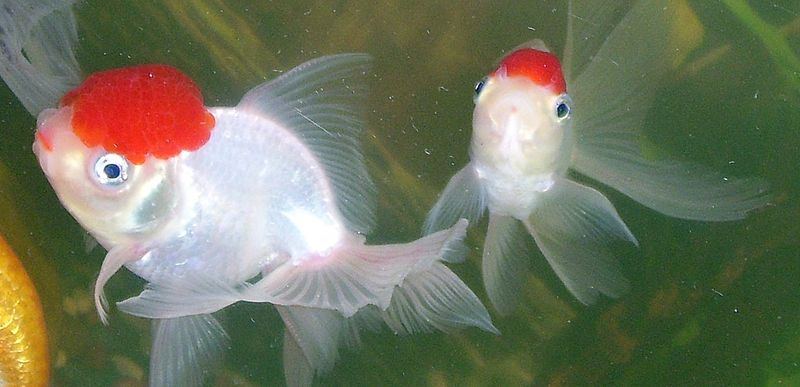
Ornamental, unique goldfish from China and Japan, characterized by a hood like raspberries dikepalanya.
Goldfish are very famous all over the world, and have a great body with 4 long tails
6.Celestial Eye / Choten gan Goldfish:
One of the odd goldfish from China and Korea.Mata goldfish is like a telescope eye goldfish, but pointing upwards The body is shaped like a torpedo fish, and no fins on.
7.Lionchu/Lionhead Goldfish:
Unique goldfish is a goldfish that has no fins on the Thai and the result of cross breeding between lionheads and ranchus. Has a great body, wide and curved to the rear and a large head.
8.Ryukin Golfish:
Brightly colored goldfish and withdraw from Japan is a fin that amount 2 times the body length, snout is pointed and his back bent Ryukin have colors like maroon, red and white, white, metallic and calico color. A good aquarium maintenance in these fish can reach up to 8 inches or 21 cm.
Another nickname is Ribbontail Japan, Fringetail, Fantail or Veiltail
9.Calico/Nacreous Goldfish:
Goldfish named Calico or Nacreous has a mix of metallic and transparent color scales that give the impression of pearls.
Calico can grow to 12 inchi.Coraknya consist of patches of red, yellow, gray and black with dark spots and blue.
10.PomPom/Hanafusa Goldfish:
Hanafusa have flesh that grows like a pom pom around his nose, his body like Lionhead, but that grows is her nose, and sometimes even have flesh that grows up through the lower jaw
11.Chinsurin / Pearlscale Goldfish:
Goldfish this one punysa scales speckled spots and colored pearls,
originated from Japan and called Chinsurin
Unique Facts about Golden Fish :
* Digestive goldfish is very simple, and very hard to digest protein
* Chef goldfish can change the color of the body, according to the place where they are stored or maintained
* Goldfish chef produces pigment when exposed to light. If the fish Mas placed in the dark, he would seemingly be brighter in the morning, and when repeatedly placed in a dark place, then the goldfish will lose its color.
* Chef goldfish can grow up to maximum length of 58.42cm and weighs 4.5 kg
* Goldfish chef longest ever measured 47.7 cm long, from snout to tail, in the Netherlands
* Chef goldfish can live to 20 years, but pet goldfish only live 6 to 8 years (healthy lifestyle ga ya?)
* Chef's oldest goldfish ever recorded 49-year-old
* Chef can live goldfish in the pond surface freezes, long as there is enough oxygen and water is not fully hardened
* In Italy there are laws that prohibit the use of goldfish as prizes carnival
* In Rome prohibited from maintaining a goldfish in a jar, because according to them very cruelly confining fish in a place like that.
Source : http://wong168.wordpress.com
Showing posts with label Freshwater fish. Show all posts
Friday, May 6, 2011
Tuesday, April 26, 2011
How to Care for Arowana Fish
This fish is one of my favourite freshwater fish, Arowana fish Asian Arowana or (Scleropages formosus), is a species of freshwater fish from Southeast Asia. This fish has a long body, anal fin is located far behind the body. Asian Arowana generally have a silvery color. Asian Arowana are also called "Dragon Fish" because it is often linked with the dragon of Chinese Mythology.
Asian Arowana is a native species of rivers in Southeast Asia, especially Indonesia. There are four varieties of colors contained in the location:
* Green, found in Indonesia, Vietnam, Burma, Thailand, and Malaysia.
* Gold with a red tail, found in Indonesia.
* Gold, found in Malaysia.
* Red, found in Indonesia.
Asian Arowana are listed in the endangered species list with the status of "critically endangered" by IUCN in 2004. The number of species that are declining due to frequent trading because of the high value as aquarium fish, mainly by the Asian community. Followers of Feng Shui can pay a heavy price for these fish.

How to Care for Fish Arowana:
1. Notice aquarium equipment
Success of the aquarium into a comfortable place for arowana fish, really influenced by the completeness of supporting facilities.
Aerator
Function aerator or air pump is supplying air into the aquarium water, and simultaneously vaporize or push the remnants of burning out from the aquarium. Aerator is quite good, if a small electrical current that moves him, but a relatively large .
Heater & Thermometer
Heater is necessary especially when the aquarium water temperature dropped dramatically. While the water temperature control equipment or thermometer was also installed in the aquarium. In cold areas, heater and thermometer is very necessary.
Filter
Filter or filter function to filter the water in the aquarium. Work includes this filter to suck up water aquarium, filter, and back again into the tank in a clean condition.
TL Lamp
The presence of fluorescent lights, in addition to emit light, also can enhance your appearance aquarium. But, do not let light fluorescent lamp was a cause heat in excess of needs. Ideally for an area of 80x40 cm aquarium fluorescent lamps require 20 watts power.
2. Diligent aquarium maintenance
I can not help if you already love Arowana fish in the aquarium, it is enough diligent care. because then that, the appearance of arowana in the aquarium look healthy, fresh, and fun.
Feeding.
The main menu is a centipede arowana in the aquarium. but do not constantly given a centipede, should be varied with other foods. for example: shrimp, cockroaches, frogs, centipedes, lizards, and crickets.
Control & running water.
Every day is required to control water temperature and ph. As for the ideal water temperature for arowana fish around 25-27 degrees Celsius. if the temperature of cold water, immediately turn on the heater until the water temperature as needed. whereas the desired ph of about 6 to 8.5. if the ph is too low, then add the lime into the tank. in addition, water sanitation should be noted also, please treat the aquarium water with malachite green, with a frequency of 3 weeks.
and do not forget, aquarium water was also replaced. but running water is dipilahkan into two, namely: (a) regular water changes every 2 days with a volume of 10% of the total volume of aquarium water, and (b) total water change done every 3 months. if you use pam water, should be allowed 24 hours in advance for the content of chlorine to settle, and after that can be inserted into the aquarium.
3. Aquarium interior.
Life in the aquarium is a replica of the environment in the wild. therefore, necessary in the aquarium interior. This means that demands an appreciation of aesthetics, so the combination of the beauty of the aquarium with elegant Arowana fish can show a harmonious shades of coolness.
Aquatic plants.
Given the origin of arowana fish who like to hide under water plants, then we are ready to provide the plant in question. There are several types of aquatic plants to choose from, among others: vallisneria spiralis, hidrilla VERTICILLATA, riccia fluiutana, higrophila polisperma, pistia stratiotes, najas indica, and so forth.
Sand and rocks.
Sand is used as the foundation stone laying. should use river sand, which is still mixed with humus. in addition, are also included rock and coral-essay. ideal size of stones berdia meter 3 mm. these rocks have a variety of patterns and colors that range but still beautiful.
Source : http://blaz-langz.blogspot.com
Asian Arowana is a native species of rivers in Southeast Asia, especially Indonesia. There are four varieties of colors contained in the location:
* Green, found in Indonesia, Vietnam, Burma, Thailand, and Malaysia.
* Gold with a red tail, found in Indonesia.
* Gold, found in Malaysia.
* Red, found in Indonesia.
Asian Arowana are listed in the endangered species list with the status of "critically endangered" by IUCN in 2004. The number of species that are declining due to frequent trading because of the high value as aquarium fish, mainly by the Asian community. Followers of Feng Shui can pay a heavy price for these fish.

How to Care for Fish Arowana:
1. Notice aquarium equipment
Success of the aquarium into a comfortable place for arowana fish, really influenced by the completeness of supporting facilities.
Aerator
Function aerator or air pump is supplying air into the aquarium water, and simultaneously vaporize or push the remnants of burning out from the aquarium. Aerator is quite good, if a small electrical current that moves him, but a relatively large .
Heater & Thermometer
Heater is necessary especially when the aquarium water temperature dropped dramatically. While the water temperature control equipment or thermometer was also installed in the aquarium. In cold areas, heater and thermometer is very necessary.
Filter
Filter or filter function to filter the water in the aquarium. Work includes this filter to suck up water aquarium, filter, and back again into the tank in a clean condition.
TL Lamp
The presence of fluorescent lights, in addition to emit light, also can enhance your appearance aquarium. But, do not let light fluorescent lamp was a cause heat in excess of needs. Ideally for an area of 80x40 cm aquarium fluorescent lamps require 20 watts power.
2. Diligent aquarium maintenance
I can not help if you already love Arowana fish in the aquarium, it is enough diligent care. because then that, the appearance of arowana in the aquarium look healthy, fresh, and fun.
Feeding.
The main menu is a centipede arowana in the aquarium. but do not constantly given a centipede, should be varied with other foods. for example: shrimp, cockroaches, frogs, centipedes, lizards, and crickets.
Control & running water.
Every day is required to control water temperature and ph. As for the ideal water temperature for arowana fish around 25-27 degrees Celsius. if the temperature of cold water, immediately turn on the heater until the water temperature as needed. whereas the desired ph of about 6 to 8.5. if the ph is too low, then add the lime into the tank. in addition, water sanitation should be noted also, please treat the aquarium water with malachite green, with a frequency of 3 weeks.
and do not forget, aquarium water was also replaced. but running water is dipilahkan into two, namely: (a) regular water changes every 2 days with a volume of 10% of the total volume of aquarium water, and (b) total water change done every 3 months. if you use pam water, should be allowed 24 hours in advance for the content of chlorine to settle, and after that can be inserted into the aquarium.
3. Aquarium interior.
Life in the aquarium is a replica of the environment in the wild. therefore, necessary in the aquarium interior. This means that demands an appreciation of aesthetics, so the combination of the beauty of the aquarium with elegant Arowana fish can show a harmonious shades of coolness.
Aquatic plants.
Given the origin of arowana fish who like to hide under water plants, then we are ready to provide the plant in question. There are several types of aquatic plants to choose from, among others: vallisneria spiralis, hidrilla VERTICILLATA, riccia fluiutana, higrophila polisperma, pistia stratiotes, najas indica, and so forth.
Sand and rocks.
Sand is used as the foundation stone laying. should use river sand, which is still mixed with humus. in addition, are also included rock and coral-essay. ideal size of stones berdia meter 3 mm. these rocks have a variety of patterns and colors that range but still beautiful.
Source : http://blaz-langz.blogspot.com
Wednesday, March 9, 2011
Cultivation Oscar Fish
Oscar fish is a freshwater fish species from the Amazon river, Panama, Paraguay and Tio-Rio-Negro South America, and sudapat developed culture in Indonesia.
Oscar Fish has an interesting shape and color. Blackish body color with yellow batikan reddish. Unlike other fish, oscar fish require a little special treatment in the way of breeding, so this Oscar fish, including fish, an expensive.
1) Parent Selection
a. A good parent to be cultivated is 1.5 years old to 2 years with a body length of 15 cm and 10 cm height and
brightly colored.
b. Parent selection begins when the fish was a teenager Oscar (5 ~ 6 months), by mixing 5 males and 5 females. Oscar fish these teenagers will find its own partner. After each pair then we separate them in a separate vessel until a parent.
2) The difference of Parent Males and Females, see the following table under it?
How Spawning
a. Marriage place is made of cement measuring 1 1 / 2 x 1 x 0.5 m, filled with water that has been deposited during 12 ~ 24 hours as high as 30 ~ 40 cm.
b. If the marriage tub area, can be sealed.
c. A pair of Oscar parent who has cooked eggs inserted into the vessel.
d. In each column given a flat, dark stone and on it was closed most of the column for a calm atmosphere.
e. Oscar held a lunch and afternoon spawning directly fertilized by males.
f. Eggs which are located on the flat stone that has been fertilized diangakat inserted into the tank for hatching. Aquarium measures 70 x 40 x 40 cm filled with water as high as 10 cm, for holding a pair of eggs.
g. Go to the aquarium were given air (aeration) with weak power.
h. Done 3 days is usually the eggs begin to hatch.
i. Water was given a mixture emalin or methylene blue.
SEED MAINTENANCE
1) The seeds of this fish until the age of 4 days do not need to be fed, because they still have a supply of food on sacknya yolk (egg yolk).
2) On day 5 seed fed Rotifera. Feeding should not be delayed because Oscar fish are cannibals (eat each other).
3) On day 10 was given a flea can epidermis that has been filtered.
4) After 2 weeks old seedlings start given without filtered water bug and started to try hair worms.
5) The seed has to be moved to the tub / pool wider after the age of 25 days.
ENLARGEMENT
1) Enlargement of fish is done after the seedlings were 25 days.
2) Seed produced approximately 1000 s / d 3000 tail for one-time hatching.
3) Body used a 2 x 1 x 1 m, and filled with water as high as 20-25 cm.
4) For the first time enlarged to approximately 300 fish stocked fish.
5) To reduce the heat of the sun at noon, on the vessel were given water plants like water hyacinth and Hidrilla Verticilata. To prevent entry of rain water is too much, on top of the tub covered in part with plastic zinc.
6) carried out after boiling the seeds in the tub for a month with the number to 200 tail
7) Food provided in the form of hair cacng.
8) After the fish were 5 ~ 6 months, the fish had to be selected to be a parent, the food provided was replaced with a fresh shrimp time / life, can also be given rebon shrimp that are still fresh.
9) A pair of parent to produce eggs in 1000 s / d 4000 points for one spawning.
To get a beautiful color on Oscar fish, giving food must be contained calcium (chitine) starting from childhood, such as water fleas (Moina), Rotifera, hair worms, Artemia, shrimp or shrimp rebon times.
Oscar fish have a relatively high economic value;
OSCAR FISH VIDEO :
SOURCE
Fisheries Agency of DKI Jakarta, 1996
NGVUGX5X7436
Oscar Fish has an interesting shape and color. Blackish body color with yellow batikan reddish. Unlike other fish, oscar fish require a little special treatment in the way of breeding, so this Oscar fish, including fish, an expensive.
- BREEDING
1) Parent Selection
a. A good parent to be cultivated is 1.5 years old to 2 years with a body length of 15 cm and 10 cm height and
brightly colored.
b. Parent selection begins when the fish was a teenager Oscar (5 ~ 6 months), by mixing 5 males and 5 females. Oscar fish these teenagers will find its own partner. After each pair then we separate them in a separate vessel until a parent.
2) The difference of Parent Males and Females, see the following table under it?
| MALE PARENT | FEMALE PARENT |
| - Relatively longer body length | - The parent who has cooked belly fat |
| - More prominent genitals | - A larger hole sex |
How Spawning
a. Marriage place is made of cement measuring 1 1 / 2 x 1 x 0.5 m, filled with water that has been deposited during 12 ~ 24 hours as high as 30 ~ 40 cm.
b. If the marriage tub area, can be sealed.
c. A pair of Oscar parent who has cooked eggs inserted into the vessel.
d. In each column given a flat, dark stone and on it was closed most of the column for a calm atmosphere.
e. Oscar held a lunch and afternoon spawning directly fertilized by males.
f. Eggs which are located on the flat stone that has been fertilized diangakat inserted into the tank for hatching. Aquarium measures 70 x 40 x 40 cm filled with water as high as 10 cm, for holding a pair of eggs.
g. Go to the aquarium were given air (aeration) with weak power.
h. Done 3 days is usually the eggs begin to hatch.
i. Water was given a mixture emalin or methylene blue.
SEED MAINTENANCE
1) The seeds of this fish until the age of 4 days do not need to be fed, because they still have a supply of food on sacknya yolk (egg yolk).
2) On day 5 seed fed Rotifera. Feeding should not be delayed because Oscar fish are cannibals (eat each other).
3) On day 10 was given a flea can epidermis that has been filtered.
4) After 2 weeks old seedlings start given without filtered water bug and started to try hair worms.
5) The seed has to be moved to the tub / pool wider after the age of 25 days.
ENLARGEMENT
1) Enlargement of fish is done after the seedlings were 25 days.
2) Seed produced approximately 1000 s / d 3000 tail for one-time hatching.
3) Body used a 2 x 1 x 1 m, and filled with water as high as 20-25 cm.
4) For the first time enlarged to approximately 300 fish stocked fish.
5) To reduce the heat of the sun at noon, on the vessel were given water plants like water hyacinth and Hidrilla Verticilata. To prevent entry of rain water is too much, on top of the tub covered in part with plastic zinc.
6) carried out after boiling the seeds in the tub for a month with the number to 200 tail
7) Food provided in the form of hair cacng.
8) After the fish were 5 ~ 6 months, the fish had to be selected to be a parent, the food provided was replaced with a fresh shrimp time / life, can also be given rebon shrimp that are still fresh.
9) A pair of parent to produce eggs in 1000 s / d 4000 points for one spawning.
To get a beautiful color on Oscar fish, giving food must be contained calcium (chitine) starting from childhood, such as water fleas (Moina), Rotifera, hair worms, Artemia, shrimp or shrimp rebon times.
Oscar fish have a relatively high economic value;
OSCAR FISH VIDEO :
SOURCE
Fisheries Agency of DKI Jakarta, 1996
NGVUGX5X7436
Sunday, March 6, 2011
African butterfly fish life
Perhaps we often suspect that the only relatives arowana fish just arapaima (Arapaima gigas) from Amazon river. In fact not the case .. Arowana included in family-tounge Bony (tongue bone), and in this family there are two other fish species, namely: African Knifefish and butterfly (Pantodon buchholzi). African butterfly is the only fish in the family Pantodontidae. This fish is very similar to arowana fish and knifefish Osteoglossidae included in the genus, because it is still included in the one family that is in the family tounge Bony fish (Osteoglossiformes).
African butterfly or butterfly fish comes from the tropical waters of western Africa, particularly Nigeria, Cameroon and Zaire in the south of Niger, Lake Chad, the Congo and northern Zambezi river.
These fish live in water level in the rivers that flow slowly
and in puddles of water surrounded by lush trees and filled with tree branches that jutted into the water.
Environment like this, of course, rich with insects that became the staple food of these fish. As inhabitants of the waters above, butterfly fish can be kept in shallow water tank.
This fish is not fussy about food, but in order to stay healthy, they require insects as one of the main menu. Although the butterfly fish is a predator, this fish tends to not eat the fish smaller.
Even so, it would be better if it did not mix this fish with other fish that also has a swimming area in the waters above, such as Hatchetfish. Instead Butterflyfish can be mixed safely with the fishes that swim in the middle and bottom, because these fish have never recorded foraging in the water, other than on the surface. If you want to maintain it, the surface water in the aquarium should be quiet, and does not flow. They search for food based on contact with surface water. That is one reason why it is not advisable to mix this fish with fellow residents of the waters, because the other fish movements can disrupt the instinctive butterfly fish. Butterfly fish known to only grow about 10 cm only.
One interesting fact of this fish is that they get the name from pectoralnya fins that look like butterfly wings. The fins are not fully help the fish to 'fly', but rather assist in floating position. They will jump to grab prey. To be sure the fish is able to jump as far as 2 meters. However they do not float or fly using the 'wings' (fish that actually fly using the wings is hatchetfish fish from South America).
Because the habit of "flying" this, it is advisable to grow floating plants like duckweed to reduce these habits, while still providing an area free of plants. Tank itself, of course, must be sealed very well.
The condition of water needed for life to be soft Butterfly fish (<10 ° DGH) and slightly sour acidity level (pH <6.5). Filtration through peat is highly recommended. Lighting should not be too bright, because of its natural konsisi own these fish live in the forests are filled with plants, so that the water itself, of course, filled with rotting leaves, acid water conditions, and sunlight difficult to penetrate the water because the trees are very dense . Male fish have the anal fin is curved, while female fish have fins that is straight. Although it is quite easy to distinguish, but the breeding of this fish in the aquarium quite difficult. Water temperature is not too critical as long as not too extreme (too hot or too cold)
In general, butterfly fish is a fish that is very unique, and very exciting to be maintained. Although not look too pretty, fish fish fish still is an amazing collection.
African butterfly or butterfly fish comes from the tropical waters of western Africa, particularly Nigeria, Cameroon and Zaire in the south of Niger, Lake Chad, the Congo and northern Zambezi river.
These fish live in water level in the rivers that flow slowly
and in puddles of water surrounded by lush trees and filled with tree branches that jutted into the water.
Environment like this, of course, rich with insects that became the staple food of these fish. As inhabitants of the waters above, butterfly fish can be kept in shallow water tank.
This fish is not fussy about food, but in order to stay healthy, they require insects as one of the main menu. Although the butterfly fish is a predator, this fish tends to not eat the fish smaller.
Even so, it would be better if it did not mix this fish with other fish that also has a swimming area in the waters above, such as Hatchetfish. Instead Butterflyfish can be mixed safely with the fishes that swim in the middle and bottom, because these fish have never recorded foraging in the water, other than on the surface. If you want to maintain it, the surface water in the aquarium should be quiet, and does not flow. They search for food based on contact with surface water. That is one reason why it is not advisable to mix this fish with fellow residents of the waters, because the other fish movements can disrupt the instinctive butterfly fish. Butterfly fish known to only grow about 10 cm only.
One interesting fact of this fish is that they get the name from pectoralnya fins that look like butterfly wings. The fins are not fully help the fish to 'fly', but rather assist in floating position. They will jump to grab prey. To be sure the fish is able to jump as far as 2 meters. However they do not float or fly using the 'wings' (fish that actually fly using the wings is hatchetfish fish from South America).
Because the habit of "flying" this, it is advisable to grow floating plants like duckweed to reduce these habits, while still providing an area free of plants. Tank itself, of course, must be sealed very well.
The condition of water needed for life to be soft Butterfly fish (<10 ° DGH) and slightly sour acidity level (pH <6.5). Filtration through peat is highly recommended. Lighting should not be too bright, because of its natural konsisi own these fish live in the forests are filled with plants, so that the water itself, of course, filled with rotting leaves, acid water conditions, and sunlight difficult to penetrate the water because the trees are very dense . Male fish have the anal fin is curved, while female fish have fins that is straight. Although it is quite easy to distinguish, but the breeding of this fish in the aquarium quite difficult. Water temperature is not too critical as long as not too extreme (too hot or too cold)
In general, butterfly fish is a fish that is very unique, and very exciting to be maintained. Although not look too pretty, fish fish fish still is an amazing collection.
Monday, February 28, 2011
Freshwater fish best for your home
You must protect freshwater aquarium fish from dust or hazardous materials entering the aquarium. So the cover is important. Freshwater fish would require water temperatures varying up to ten degrees. Never feed the fish in excessive amounts.
certain fish have a tendency to fight with each other. So if you put in a lot of fish together and then take care that there is no oxygen deficit and plants in the aquarium. If you love pets then the fresh water fish aquarium will offer you a unique pleasure. You will find great joy in turning the water to them or offer them food and watch them swim in the aquarium.
You must keep the aquarium clean and tidy for the appropriate filter is important. A good filter will keep the aquarium water clean and fresh. In addition to the water filter you also have to keep the air pump that will supply fresh air so that the fish get the oxygen and even plants in the tank will require a fresh air.
There are various kinds of ornaments are available for the aquarium. This certainly increases the appeal of the aquarium, but at the same time these things often can contaminate the water environment. These decorative takes up less space so the fish do not get enough space to travel. But you must leave enough room for the fish so that they can move freely.
You must communicate with vendors aquarium for freshwater fish species they encounter in if necessary you can shop around for the varieties of freshwater fish. If you research the internet you will find different types of freshwater fish. From relevant sites you can find out more about freshwater aquarium fish.
Article Source: http://EzineArticles.com/?expert=Johnny_A
Sunday, January 2, 2011
Tropical Fish and Salted Fish
Tropical Fish
If you are a novice interested in starting an aquarium, we have tips to get you started. Visit the fish tank Q and A for answers to common questions. We also have ideas for your first tropical fish to start your journey with a freshwater aquarium hobby. This is a very important step when creating a new aquarium. tropical aquarium you success for the first few months depending on the type of tropical fish to choose for the first time held. This fish is a tropical species guide should be read before you go shopping for your first fish.
You can not ignore the importance of proper aquarium filtration and we also have a part to serve an aquarium heater so you can learn before you buy. Not sure what the aquarium filter for use in your new aquarium? There are many styles and designs available, and all filters have the same common goal - to sustain life in your aquarium. It is important to choose the right fish tank filter for your tank. This article teaches what to do and aquarium filtration runs on several different styles of aquarium filters to help you choose the best for your fish tank. Also see this section to help the aquarium.
Looking for aquarium step-by-step guide to making fresh water directed at the new aquarium hobby? Including helping you select the type of freshwater fish and appropriate advice about how to care for your pet fish. Helps you to consider and take care of all the little details so important to future success and welfare of your pet's water. Do not forget to watch your water chemistry! After your fish tank up and running, we display aquarium maintenance tips to keep your tropical fish happy and healthy. learn about the aquarium additive that adds essential nutrients to keep your tropical freshwater fish healthy.
Read about species that are more popular and the most common like oscar fish, betta fish and gold fish.
Oscar fish is one of the most sought-after addition of fresh water aquarium. What a strange attraction nimble creatures? Find out why their fans love an Oscar fish and why they are so different from the ordinary inhabitants of the tank. Learn how to care for interesting creatures and tips on keeping them happy so that their personalities will shine!
Betta fish are known for easy maintenance and beautiful flowing fins. Myths surrounding the Siamese fighting fish, and fortunately, we have them all be explained and clarified myths about betta fish, or Siamese fighting fish.
Goldfish has a long history, learning history is amazing and discover er appeal if goldfish. O Easy to maintain and watch the peace with an array if features of living, they are something out of this world! We have all the fancy tips gold fish care you need. Koi fish also appeared in the fish pond we
Sometimes the fish tank you may be attacked by the disease of tropical fish, it's inevitable and natural part of the tank that your fish population will have some type of disease at one time or another, when this happens, check o ut fish categories for the treatment of tropical diseases some and prevention tips.
Another common problem face by the keeper of tropical fish aquarium is the water cloudy. If you have cloudy water aquarium fish tank you learn why and how to fix cloudy. Cloudy water in your fish tank is usually the first sign of trouble. Follow these steps to fix the problem so you do not lose one of your aquarium inhabitants.
Another issue often faced by carers aquarium fish aquarium is the water green. Find out how to combat this problem common fish tank and enjoy your tropical aquarium crystal sparkling clean again!
Salted Fish
A hobby of aquarium keeping a completely different experience, marine fish tank for the adventurous and more experienced aquarium hobby. If you are interested in starting a saltwater aquarium, it has a beginner tips and advice to care for your marine fish. Lean how to set up a marine aquarium, proper technique and marine equipment needed for your success.
Once you have set the fish tank, the next step is to figure out what type of aquarium filter is best to use. There are many styles but we must mention some of the best we had success with in the past. Another important addition to caring for your tropical fish aquarium lighting, marine fish have different requirements then the freshwater fish.
Once you have set your marine aquarium, the next step is to determine what type of fish you want to put in your tank. You must be choosy because many marine fish species that are incompatible with each other.
Now that you have your saltwater fish tank set up and you enjoy the sea creatures, it's time to consider the treatment of sea water aquarium. We also have informative articles on marine algae, which guards most marine fish will meet at one point in time or another.
If you choose one or try a tropical fish tank marine fish tank, this website has important advice you need. remember that different opinions and you will hear a variety of how to care for your fish and keep your aquarium so use our advice together with professional advice from other pet and you are sure to achieve success!
If you are a novice interested in starting an aquarium, we have tips to get you started. Visit the fish tank Q and A for answers to common questions. We also have ideas for your first tropical fish to start your journey with a freshwater aquarium hobby. This is a very important step when creating a new aquarium. tropical aquarium you success for the first few months depending on the type of tropical fish to choose for the first time held. This fish is a tropical species guide should be read before you go shopping for your first fish.
You can not ignore the importance of proper aquarium filtration and we also have a part to serve an aquarium heater so you can learn before you buy. Not sure what the aquarium filter for use in your new aquarium? There are many styles and designs available, and all filters have the same common goal - to sustain life in your aquarium. It is important to choose the right fish tank filter for your tank. This article teaches what to do and aquarium filtration runs on several different styles of aquarium filters to help you choose the best for your fish tank. Also see this section to help the aquarium.
Looking for aquarium step-by-step guide to making fresh water directed at the new aquarium hobby? Including helping you select the type of freshwater fish and appropriate advice about how to care for your pet fish. Helps you to consider and take care of all the little details so important to future success and welfare of your pet's water. Do not forget to watch your water chemistry! After your fish tank up and running, we display aquarium maintenance tips to keep your tropical fish happy and healthy. learn about the aquarium additive that adds essential nutrients to keep your tropical freshwater fish healthy.
Read about species that are more popular and the most common like oscar fish, betta fish and gold fish.
Oscar fish is one of the most sought-after addition of fresh water aquarium. What a strange attraction nimble creatures? Find out why their fans love an Oscar fish and why they are so different from the ordinary inhabitants of the tank. Learn how to care for interesting creatures and tips on keeping them happy so that their personalities will shine!
Betta fish are known for easy maintenance and beautiful flowing fins. Myths surrounding the Siamese fighting fish, and fortunately, we have them all be explained and clarified myths about betta fish, or Siamese fighting fish.
Goldfish has a long history, learning history is amazing and discover er appeal if goldfish. O Easy to maintain and watch the peace with an array if features of living, they are something out of this world! We have all the fancy tips gold fish care you need. Koi fish also appeared in the fish pond we
Sometimes the fish tank you may be attacked by the disease of tropical fish, it's inevitable and natural part of the tank that your fish population will have some type of disease at one time or another, when this happens, check o ut fish categories for the treatment of tropical diseases some and prevention tips.
Another common problem face by the keeper of tropical fish aquarium is the water cloudy. If you have cloudy water aquarium fish tank you learn why and how to fix cloudy. Cloudy water in your fish tank is usually the first sign of trouble. Follow these steps to fix the problem so you do not lose one of your aquarium inhabitants.
Another issue often faced by carers aquarium fish aquarium is the water green. Find out how to combat this problem common fish tank and enjoy your tropical aquarium crystal sparkling clean again!
Salted Fish
A hobby of aquarium keeping a completely different experience, marine fish tank for the adventurous and more experienced aquarium hobby. If you are interested in starting a saltwater aquarium, it has a beginner tips and advice to care for your marine fish. Lean how to set up a marine aquarium, proper technique and marine equipment needed for your success.
Once you have set the fish tank, the next step is to figure out what type of aquarium filter is best to use. There are many styles but we must mention some of the best we had success with in the past. Another important addition to caring for your tropical fish aquarium lighting, marine fish have different requirements then the freshwater fish.
Once you have set your marine aquarium, the next step is to determine what type of fish you want to put in your tank. You must be choosy because many marine fish species that are incompatible with each other.
Now that you have your saltwater fish tank set up and you enjoy the sea creatures, it's time to consider the treatment of sea water aquarium. We also have informative articles on marine algae, which guards most marine fish will meet at one point in time or another.
If you choose one or try a tropical fish tank marine fish tank, this website has important advice you need. remember that different opinions and you will hear a variety of how to care for your fish and keep your aquarium so use our advice together with professional advice from other pet and you are sure to achieve success!
Thursday, December 30, 2010
Freshwater Aquarium Plants
Adding aquarium plants to your aquarium can be a good idea because these plants use the nitrates that may be difficult for your tropical fish if your nitrate level is high enough. When all is said and done plastic plants will never be able to compete with the beauty of real life plants.
Some are easier to manage than others. The Java Fern, Vallisneria spiralis polysperma Hygrophila and is one of the more powerful aquarium plants.
Before you start your plant adventures you have to make some decisions.
Water Parameters
Aquarium plants and tropical fish are identical in their requirements when looking at the water parameters. different water conditions required by different aquarium plants. Plants that you want to require certain water conditions so it is important to know this. Make sure that for every plant that you know the preferred ph, water hardness and level of illumination.
Good substrate
For your plants to survive is essential to have a good substrate. You can put some plants directly into the gravel but you can also put plants in the plantation clay. If you place your plants directly into the gravel you will need to use iron supplement for your aquarium water because these plants will not get the nutrients they need from clay iron-fortified.
bad lighting is one of the main reasons why plants do not perform well in the aquarium. In general, 20 -30 watts of lighting that comes as standard with many of the fish tank is really not adequate. Each plant will require different lighting levels, is usually measured in watts per gallon. If you want your plants to grow you have to consider this measure in order for photosynthesis takes place. CO2 is also needed for photosynthesis. Fish respiration process that occurs in an aquarium may produce enough CO2. However, if you have a heavy planted tank, you might want to get a CO2 injector for your aquarium because you will not get enough CO2 from your fish.
Fish Compatibility
certain fish species will make an aquarium plant keeping nightmare. For example, Silver Dollar really enjoy biting on live plants, too, will enjoy the Oscars and Goldfish aquarium plants even revoke your place in the tank. If you already have fish, do research on your particular species of plant life before starting your journey.
Before buying any plants that you should find out their exact needs and whether you are able to provide those needs, if not, you will be wasting money.
Finally, you should eat your plants with fresh water plant food special. I usually feed mine about once a week.
All looks fantastic in the aquarium and only a few require a very high level of illumination.
1. Java Ferns. pH 5.5 to 7.5, temp. 20-28 Celsius, water hardness 2-15 degrees, tolerates low light levels. This is better associated with driftwood floating rather than planted in the gravel.
2. Amazon Sword. pH 6.5 to 7.5, temp. 22-28 Celsius, water hardness 2-15 degrees, Lighting 50 watts per 25 water air bubbles. This should be planted in loose substrate and supplemented with iron fertilizer.
3. Argentina Sword. pH 6.5 to 7.5, temp. 16-25 Celsius, Water hardness 1-5 degrees, Lighting 50 watts per 25 water air bubbles. It must be equipped with iron fertilizer and planted in loose substrate.
4. Hygrophila Polysperma. pH 6.5 to 8.0, temp. 20-30 Celsius, water hardness 2-15 degrees, Lighting 50 watts per 25 water air bubbles. small red or green leaf atanding at 24 inches, they must be placed in the middle of the back of the tank so they have room to grow.
5. Umbrella Plant. ph 5.0 to 7.0, temp. 22-25 Celsius, water hardness 4-12 degrees, Intense Lighting. They could be anywhere between 8-12 inches tall. They have a tall, thin stems with tiny leaves at the top of each stem that branches to form stars. They will die if completely submerged in water aquarium because they do not actually water plants. You can have a beautiful green plants as part of fish habitat-Just you grow plants on the surface and drown the roots below.
6. Vallisneria spiralis. pH 6.5 to 7.5, temp. 15-30 Celsius, water hardness 5-15 degrees, Lighting 50 watts per 50 water air bubbles. Vallisneria spiralis can grow to 24 inches long and like the grass. Because Vallisneria spiralis not too fussy with water parameters, it is a good choice to start the aquarists. These plants look best along the sides or back of your aquarium
7. Anubias Barteri. pH 6.5 to 7.5, temp. 22-28 Celsius, water hardness 8 degrees, Lighting Moderate. Anubias Barteri has broad green leaves that grows by 16 inches long. They grow best with CO2 fertilization.
8. Other options include a low light: Cryptocoryne, Dwarf Hairgrass, Water Sprite, Anacharis, and Cabomba.
Selecting an Aquarium
Size
Generally, the bigger the better but there are some practical problems. How much space do you have? How long your hand? How much weight can the floor you continue? How much money do you have? Remember, the bigger the tank, the more expensive all the other necessary items will.
Long
If space is not a problem, try to find a tank that is at least 48 "(120 cm) long main reason is lighting -. The best and cheapest fluorescent lamps come in 48" long. short lamps are available but there is a more limited choice of types and spectrum. Also, short light tend to not "instant start" and can cause problems with some ballast. Finally, short light tend to be more expensive. If you can find the tank a little longer than 48 ", all the better A 48." Bulb and a pair of end cap or bulb holder may be slightly longer than 48 "and will not fit in the hood that outside dimensions of 48". Most tank manufacturers do not seem to realize that planted tanks require several watts enough to be successful and distinctive pair 18 "20 watt bulbs will not work!
We really like the 60 "(150 cm) long tank. It is a common European size but 60" long acrylic tank can be found in the United States I believe one of the manufacturers make 60 "glass tank, but it may be a special order. Extra length allows fits 48 "fluorescent lights in the hood without any problems. 12 Extra "also seems to create a visual display that is big enough also when we sat near the aquarium to observe it,. We seem to take a distance from the tank that allows us to see the goal of a 48" tank with our peripheral vision but the 60 "tank just enough long so that we do not notice expires. This gives the optical illusion that the tank lasts forever!
Width
More broadly tank is the better you can aquascape it. Having more width allows you to plant height of different layers of the background to the background. This gives a very good look and really make the aquarium look wider than they are.
Minimum width, we would recommend is 18 "(45 cm). Unfortunately, the most common and most expensive 48" long tank in the U.S. is the standard "55" gallon tank. The "55" only 13 "wide and very limited in what you can do with aquascaping you need. Consider a" 55 "only if the cost is a major factor in your decision. A 75 gallon tank is the size we would recommend as the smallest" The best "tank sizes.
A 24 "wide tank is very interesting and our next recommendation. Extra 6" seem more than it actually is when you begin to arrange the plants, rocks and driftwood. When you initially bring the plant home from the store, they looked very small and difficult to buy enough to fill the space. But after several months of growth, you will realize how much space a few larger plants to take when they are adults! A 24 "wide tank will be a large space for their" plant shows "you've always wanted.
larger tanks are available but should be considered carefully. Plants require a lot of maintenance, especially pruning and replanting. You may find it very difficult to reach the back of lower than 30 "(75 cm) wide tank, especially if it is higher than 18". Some people we know have a large tank like that and they are reported to have a bath before work in the tank for fear of poisoning fish with underarm deodorant! If you are thinking of a larger tank, try it in the store first. Make sure you set at the height would have at home and pretend you are working in the tank. Relying on it for 30 minutes to see how his back feels.
High
This higher plant tanks are better able to grow to their full height (or more precisely, can grow taller than they should.) We have found that all the plant stem will grow at least 18 "tall, even that is not supposed to according to plant book. Having a higher tank means more time between trimming and better proportions overall.
We would not recommend going less than 18 "(too restrictive) or more than 24" (difficult access). Also, if the tank is more than 24 ", you will have more problems with the right lighting and may have to resort to expensive metal halide system depth is our favorite. 22".
Type
There are two types of aquariums that are available: glass and acrylic.
Glass
Glass is generally more expensive up to 120 gallons or so but it will be much heavier than acrylic if the glass is more than 1 / 8 "thick (as is typical in a standard" 55 ") tank, Most of the 48." Like 75 or 90, use 1 / 2 "glass A 120g tank (48x24x24) and 250 pounds empty weight. Can be very awkward to transport and move around. Make sure you have a few, large muscular friend if you go with something like this.
More resistant to scratches from acrylic glass but still could be scratched if you are not careful. A little rust on the razor you can leave some scratches as can be "pot scrubber" type material. Unlike acrylic, scratches in glass can not be polished out. Even worse, scratches inside will be very visible. Scratches on the inside of an acrylic tank is largely obscured.
If you are planning on drilling holes in the tank to the filter pipe, make sure your glass panel will try to drilling was not angry. It is very difficult to successfully drill tempered glass!
Acrylic
Acrylic has several advantages over the glass. The first thing you remember is the larger acrylic tank is much lighter than similar sized glass tank. Acrylic is clearer than glass - you will not see as much green (unless you pay a large amount of money for custom optical glass tank!). In the long 60 "or less, the tank has acrylic front and sides are formed from one part of the material - there are round the corner instead of a glued joint butt That's usually the first thing people comment on when they see the acrylic tank for the first time. Time.
There are some disadvantages. Acrylic will scratch much easier than glass, so if you have children or pets with paws you might want to avoid. Shallow scratches can be polished out with fine polishing compound and patience. Scratches in the tank is usually not a problem because the refractive index of acrylic is very close to the water - scratches "disappear" when they are under water! After a few years, you may notice that the inside of the tank when it is dry run away (during water changes, for example). This is due to the abrasive action is very little special cleaning pad that is used to remove algae from the inside. But this haze is also lost when wet.
When we bought our first acrylic tank in 1972, we were worried about getting the algae from the front - clear, plain razor is not recommended. We believe that algae will not grow in acrylic. Well, let me assure you that the algae would not grow in acrylic! But, fortunately enough, do not stick as well as in the glass. Algae hardest part is the small green spots that grow in the aquarium. This paper directly from acrylic with a white buffing pads but need a razor to remove from glass.
Drilling holes for the filter in the acrylic tank is not a problem. A hole saw can be used for slow speed drill and the tooth saved enough to see lubricated and cooled with water. During the acrylic does not melt as you drill, no problems.
The biggest drawback with acrylic tank is the top plate that is used for power. Unlike glass tank completely open on top or have a small center brace, an acrylic tank has a section on top with solid acrylic pieces for various purposes. This limits access to the tank to some degree. Make sure the tank you buy has a sufficient opening for the filter, heater cables and whatever else you use. Also make sure the main access hole big enough for you to easily work in the tank. If you buy a large stone or piece of driftwood, make sure it will fit through access holes! We bought a large piece of driftwood so that will not be included in the access hole. Before I started cutting it, I made a cardboard mockup of the tank and the access hole so I can remove just enough material from driftwood, but not too much! source aquatic concepts
Water chemistry freshwater fish
I recommend that you get a good aquarium water testing kit or kits of many individuals. You will need a kit that will test as follows:
* Ammonia
* Nitrite
* Nitrate
* PH
* Water Hardness
* Chlorine / chloramine
Definition
Aerobic Bacteria
This is a bacteria that need oxygen to live.
Anaerobic Bacteria
This is a bacteria that can live without the presence of oxygen, or bacteria that do not require oxygen.
Ammonia
This chemical is the result of fish waste and rotting food in the aquarium. Ammonia is a major killer of tropical fish. new tank that will go through cycles or so tanks stocked aquarium will show ammonia readings with your test equipment. Ideally, we want to read to become ammonia 0 ppm.
Chloramine
Chloramine is a combination of chlorine and ammonia. It is a powerful disinfectant than chlorine alone and used in areas where this is required additional disinfectant. Like chlorine, you must remove chemicals from your tap water before adding it to your aquarium or tropical fish also will kill you.
Chlorine
This chemical is found in most tap water and used to kill the bad bacteria in our drinking water. Clorine must be removed before entering your aquarium or it will kill your tropical fish.
Copper
This metal can come up with tap water if you have older copper pipes. It can also get introduced to your tank if you have used any drug-based copper. Copper can be very dangerous for fish and invertebrates.
Nitrate
Nitrite is converted to nitrate during the cycling process. Nitrates are not toxic like ammonia or nitrites but their harmful and will stress your fish at a high enough level. The only way to remove nitrate is through partial water changes. Ideally you want to have a test kit readings of less than 20 ppm in fresh water tank and even less in salt water tank.
Nitrite
Ammonia is converted to nitrite by bacteria in your tank. Nitrite levels will soar in new tanks that have not been cycling. Nitrite just as toxic to tropical fish as ammonia and the only way to quickly reduce the levels of nitrite is through water changes. Nitrite eventually will be converted to nitrate by bacteria that grow in the tank and filters. Ideally, the tank is established you want to read this to 0 ppm with a test kit aquarium.
Nitrogen Cycle
This cycle usually takes 2-8 weeks to complete and will occur in all the new aquarium. You can speed up the process by using a filter material or gravel from an established tank. Even then he still could take several weeks for the tank to cycle. It is a cycle in which ammonia is converted into Nitrite and Nitrate Nitrite is converted to. Please read the article Aquarium Nitrogen Cycle for more information.
Ammonia -> Nitrite - Nitrate>
pH
pH is a scale used to measure the acidity or alkalinity of water. Range 0-14 scale with 0 the most acidic, 7 being neutral and 14 being the most alkaline. It is possible to raise or lower your pH levels with changes in water or chemicals from a local shop for your pet.
Phosphate
Phosphates can be introduced into your aquarium mainly from tap water, dead plants and fish food. High phosphate levels can cause algae outbreaks. There are products on the market to remove phosphate and you can do your part by keeping up with maintenance of your aquarium and do regular water changes. Saltwater reef tank guards and watchmen freshwater plants may want to invest in a phosphate test kit.
Salinity
This is the amount of salt dissolved in water and measured with a hydrometer.
Specific gravity
This is a measurement of the density of the amount of salt dissolved in salt water than fresh water. Explained another way, salty water consists of the elements more than fresh water. Density measurements show us how salt water is heavier or more dense than fresh water.
Water Hardness
The level of water hardness has to do with the amount of minerals dissolved in water. Calcium and magnesium are the major minerals dissolved in tap water. "Soft" mineral water soluble minerals have relatively little while "hard" water soluble lot. Water hardness does not really matter unless you are excessively soft water. Then you might have a problem with pH levels of escape. For saltwater aquariums this is especially true. Violence carbonate from sea water to give a good indication of how stable your pH.
Fish Anatomy
Body shape
There is a tremendous diversity of fish in the world. Each of these species adapting to life in a particular habitat. By examining the body shape of fish, aquariast can learn a lot about fish habitat.
Entire Body
Body shape is one of the best indicators in determining the fish environment. Surface dwelling fish have a mouth upside down, a flat back. Tall, laterally compressed species such as Discus and Angelfish, which is adjusted to life in the slow-moving waters. Slender, torpedo-shaped fish better adapted to the moving waters. Bottom-living fish have been flatten the stomach and mouth inferior. Some residents have changed the basic-swim bladder so they "hop" along the substrate rather than swim.
Head
There are three general location of the mouth of the fish often show feeding habits of these species. Surface feeding fish usually have an undershot, reverse (superior) mouth to feed on insects. Feeding fish in mid water has a terminal mouth, which is usually regarded as "normal" fish mouth. Predator fish usually have a wide mouth, while the omnivorous fish have smaller mouths. Bottom feeding fish generally have underslung mouth or lower. Often, species eat bottom is also equipped with a mustache ("whiskers"), a tactile and taste organs are used for forage in dark or muddy waters. Some fish underwater, especially Loricarids, has a suction-cup like mouth to hoarse on algae, wood, plants, or mud (for small invertebrates).
Fin
The fins are used for movement, stability, nest-building, spawning, and as a tactile organ. Fins may be single or in pairs. Many fish aquarium hobby has seen in a long, drawn out fins, which have been developed through selective breeding. In nature, this fin is not found.
Caudal fin or tail used for propulsion. Fish that have forked tail fin-swimmers regularly fast. Fish that have been rounded tail fin is able to act fast fish as predators. Large, elongated tail fin which is often used to attract mates.
Single anal fin located at the bottom of the body just forward of the tail fin. Anal fin serves to stabilize the fish while swimming. long anal fin that moves in waves used for propulsion.
Stomach or abdomen paired fins located forward of the anal fin. Ventral fins are used to provide further stability in swimming. Sometimes the fins are modified as long, thread-like fins are used as a tactile organ. Then the pelvic fins are used by the catfish Corydoras to hold the eggs during spawning.
Paired pectoral fins located near the gill cover and is used to maneuver the fish. These fins have been adapted, in the case of some species under the sea, so fish can sustain themselves or even take a walk over or under water. Sometimes the pectoral fins are equipped with spines for defense.
Single dorsal fin located on the back of the fish and serve to help balance the fish while swimming. Fin rays are often sharp, and the spine is often present.
Adipose fin is a small fin was found between the dorsal and tail on some fish.
Body covering
Most fish are covered with scales, which protect the body. Some fish such as catfish have bony plates which serve the same purpose. Other species have a very small scale or no scale at all.
Body color
Although selective breeding has produced a number of unnatural colors and patterns, wild fish are colorful. Colors have an important role for fish. Some species rely on the lines or brown color that will be disguised and escape predators statement. other species using attractive colors to attract mates, while some species use the "eye-spot" for the disappointment which to attack predators. Mouth Cichlids African daydreaming often rely colored "egg-spots" for fertilization.
The color is determined by the pigments of fish and light reflection. Fish with a solid, dark color usually has a skin pigmentation, whereas species with silvery color games rely on light reflection. Some species can change their color, while the fish some consider a different color at night.
healthy fish is almost always more colorful than one unhealthy. To keep the fish in the form of color above, maintaining favorable conditions of water, eat different foods, and home with compatible tank friend. Some color-enhancing foods can help to bring out certain colors n fish. During territorial displays, during spawning season, and on the spawning, the color of most species increased.
Gill
Gills are organs by gas that is exchanged between the fish and surrounding water. Through the gills, fish can absorb oxygen and release carbon dioxide carbon. Like the lungs, gills have a large area for gas exchange.
Some species have changed the gills and other organs so that they can air and extract oxygen atmosphere.
Because fresh water fish live in environments that they do, the water constantly passing on their bodies by osmosis. Osmosis is the movement of water from the area to an area of less soluble salts more soluble salt. This is the reason that the water penetrates into the body of the fish. Water outside is trying to dilute high salt concentrations in fish body. Therefore, freshwater fish are always out of water through their gills and never drink to keep the non-diluted salt body.
Mike from Canada added: "Yes, of each gill arch gill posterior emit soft and used in breathing and osmoregulation and all that, but the anterior face of the gill arch has, at varying levels, gill rakers Gill rakers bone point. forward and can be long and thin to eat filter or short, larger and fewer in number of items to catch larger prey in the oral cavity. "
Lateral Line
Lateral line organ is a series of fluid-filled channel that lies just below the scale. Lateral line system takes the vibrations in the water. So the fish is able to detect predators, find food, and navigate more efficiently. Many species of fish can navigate without vision in the dark or muddy water. Blind Cave Fish rely entirely on the lateral line system.
Swim bladder
Bladder swim bladder filled with air that is used to store fish in a state of neutral buoyancy where they do not sink or float. Thus the fish can sleep in the middle of the water. Numerous species of modified swim bladder to adjust their living habits. Some species can swallow air, which is passed to the swim bladder, where oxygen is excavation. This adaptation is very comfortable in the water deficiency of oxygen.
Freshwater fish
41% of all fish species found in freshwater. This is mainly due to the rapid speciation is possible that scattered habitat. When dealing with ponds and lakes, people may use the same basic model, such as when studying speciation island biogeography.
Physiology
freshwater fish differ physiologically from salt water fish in several ways. gill they should be able to relieve gas while keeping the salt dissolved in body fluids. they reduced the scale of diffusion of water through the skin: a freshwater fish that has lost too many will die scale. They also have well developed kidney to reclaim the salt from the body fluids before excretion.
Fish migration
Sturgeons are found either in the form of anadromous and fresh water stationary
Many fish species that breed in freshwater, but spend most of their adult lives at sea. This is known as anadromous fish, and include, for example, salmon, trout and three-spined stickleback. Several other fish species is, by contrast, was born in salt water but live most or part of their adult lives in freshwater, such as eels.
Species migrate between marine and fresh waters have good adaptation to the environment, when in the salt water they have to maintain the body's salt concentration at a lower level than its surroundings, and vice versa. Many species solve this problem by linking different habitats with different stages of life. Both eel, salmoniform anadromous fish and sea lampreys have a different tolerance in salinity at different stages of their lives.
Status
North America
About four out of ten North American freshwater fish are threatened with extinction, according to a study on a pan-North America, the main cause is human pollution. The number of fish species and subspecies to be endangered species has increased 40-61, since 1989.
Subscribe to:
Posts (Atom)


